 CafeConnections
Starting ratios by brew method
These are published house recipes from specialty roasters, not laws. Use them to get a good first cup, then adjust.
| Method | Start at | Example recipe (source) |
|---|---|---|
| Pour over (V60, Kalita Wave) | 1:17 | 30 g coffee, 500 g water; roaster's range 1:14 to 1:20 (Counter Culture) |
| Chemex | 1:17 | 45 g coffee, 750 g water (1:16.7) (Counter Culture) |
| French press | 1:18 | 45 g coffee, 800 g water, 6 minutes (Counter Culture) |
| Drip machine | 1:16 | 63 g coffee, 1,000 g water, about four cups (Counter Culture) |
| AeroPress | 1:11 | 18 g coffee, 200 g water (Counter Culture) |
| Cold brew concentrate | 1:8 | 200 g coffee, 1,600 g water (300 g hot to bloom, then 1,300 g room temperature), at least 6 hours in the fridge; dilute to taste (Counter Culture) |
| Espresso | 1:2 | 18 g coffee in, 36 g of espresso out in 25 to 35 seconds; range 1:1.5 to 1:2.5 (Counter Culture) |
Espresso is the odd one out: its ratio compares the dry coffee to the drink in the cup, not to the water you put in. That's why the calculator renames the water field "Espresso out" when you pick it.
How much coffee for one cup?
Weigh the water your mug actually holds. At 1:17:
- 8 fl oz (237 g water): about 14 g coffee
- 12 fl oz (355 g water): about 21 g coffee
- 16 fl oz (473 g water): about 28 g coffee
Some of that water stays behind in the grounds, so the cup you pour is a little smaller than the water you brewed with.
Why weigh instead of using scoops
A scoop measures volume, and how much a scoop of coffee weighs changes with the beans, the roast and the grind. Two scoops of one bag and two scoops of the next can be noticeably different doses. A kitchen scale that reads in grams makes the ratio mean the same thing every time, which is the only way a recipe stays repeatable.
How to adjust the ratio
- Too weak or watery: lower the second number (1:17 to 1:16) to use more coffee for the same water.
- Too strong or heavy: raise it (1:16 to 1:17).
- Sour or bitter at a strength you like: that's usually extraction, not ratio. Change the grind before you change the ratio. For espresso, Counter Culture suggests the opposite lever: a longer ratio (up to 1:2.5) for sour shots, a shorter one for harsh shots.
Change one thing at a time and write down what you changed. The home brew journal guide covers what to log so a great cup is repeatable.
☕ Save the recipe that worked
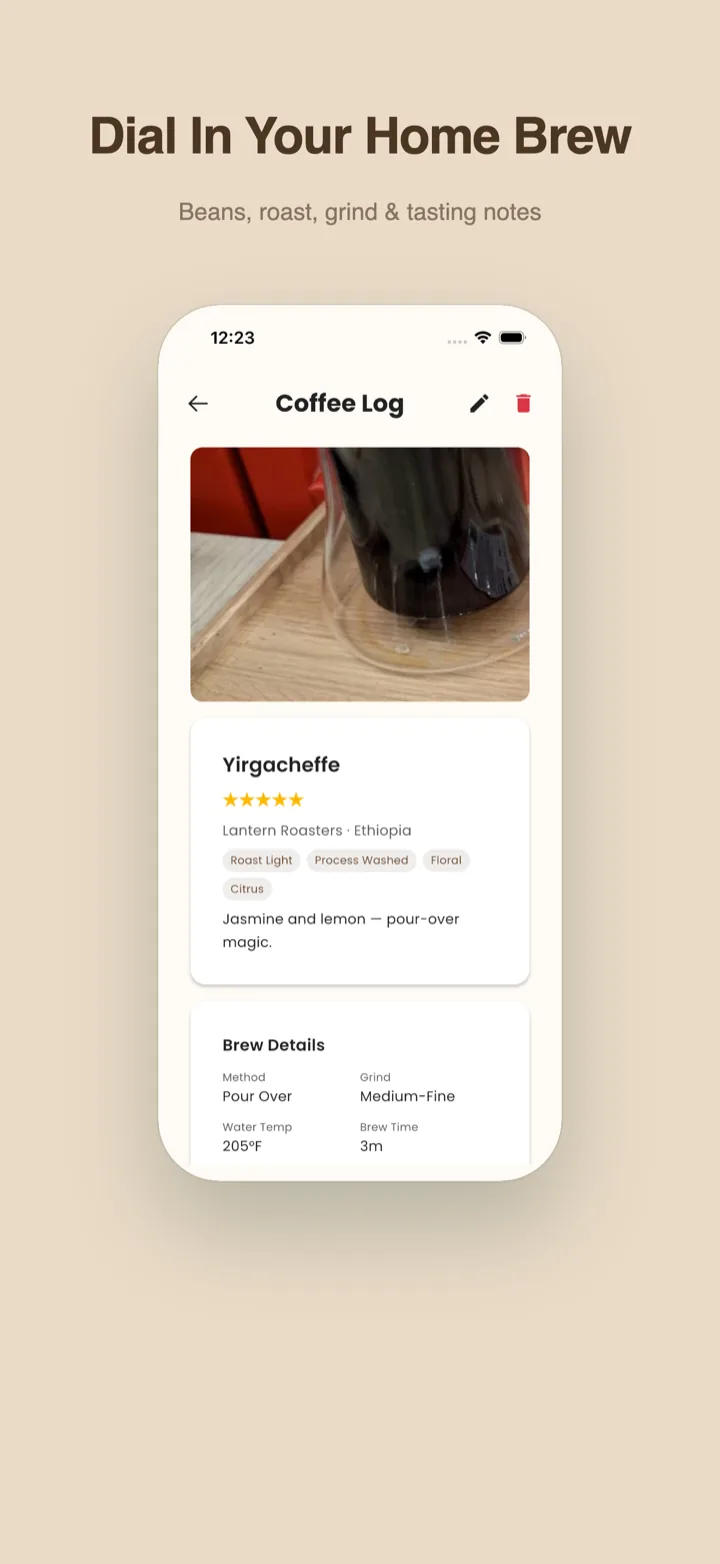
- In CafeConnections, open Journey and add a Coffee Log.
- Log the beans, roaster, roast, brew method, grind, water temperature and brew time.
- Put the ratio and the grams in the notes ("1:17, 20 g to 340 g"), then rate the cup and tag its flavors.
Next time you open the same beans, start from your best logged recipe instead of from zero.
Sources
- Counter Culture Coffee, Guide to Pour-Over Coffee
- Counter Culture Coffee, Quick + Easy Chemex
- Counter Culture Coffee, Quick + Easy French Press
- Counter Culture Coffee, Quick + Easy Aeropress
- Counter Culture Coffee, Quick + Easy Espresso
- Counter Culture Coffee, Quick + Easy Automatic Brewer
- Counter Culture Coffee, Cold Brew
See every feature on the CafeConnections coffee journal app page.
